Food safety compliance in retail grocery, QSR, and restaurant operations has long relied on a fundamentally analog process.
A team member inserts a probe thermometer into food.
A temperature is recorded manually.
A paper or digital log is updated.
The process repeats every few hours.
For decades, this method has been accepted as standard practice. But in an industry that has embraced automation across inventory management, supply chain analytics, and customer engagement, manual temperature checks remain one of the last operational blind spots. As regulatory scrutiny increases, labor costs rise, and margins tighten, this legacy approach is no longer sufficient.
A new methodology that is built around digital twin technology and engineered thermal simulation is redefining how hot food safety is monitored, documented, and optimized.
The Structural Weakness of Manual Temperature Monitoring
Manual probing introduces four systemic vulnerabilities:
1. Intermittent Data
Traditional checks capture temperature at a single moment in time, typically every 2 to 4 hours. Between those intervals, operators have no visibility.
If a hot holding asset fails 30 minutes after a recorded check, the food product can remain in the temperature danger zone for hours before detection.
2. Human Variability
Even well-trained teams are subject to:
- Improper probe placement
- Inconsistent measurement technique
- Rushed checks during peak periods
- Missed or delayed logs
- Backfilled documentation
These inconsistencies introduce compliance exposure and operational risk.
3. Documentation Risk
Health inspections depend heavily on accurate temperature records. Paper logs and manual digital entries are prone to:
- Missing entries
- Illegible handwriting
- Incorrect timestamps
- Data manipulation under pressure
In multi-unit operations, this variability compounds across locations.
4. Reactive Problem Solving
Manual systems detect failure after it occurs. They do not provide continuous trend analysis or early warning signals.
The industry requires a fundamentally different approach and one that moves from sampling to continuous intelligence.
Introducing the Digital Twin Thermal Monitoring Model
The next evolution in food safety monitoring is based on a digital twin architecture.
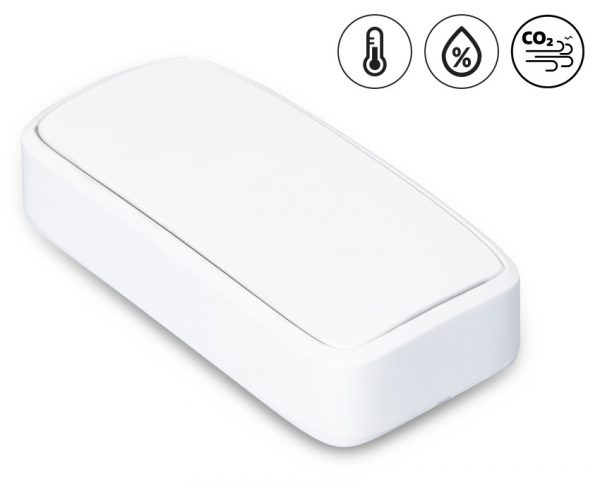
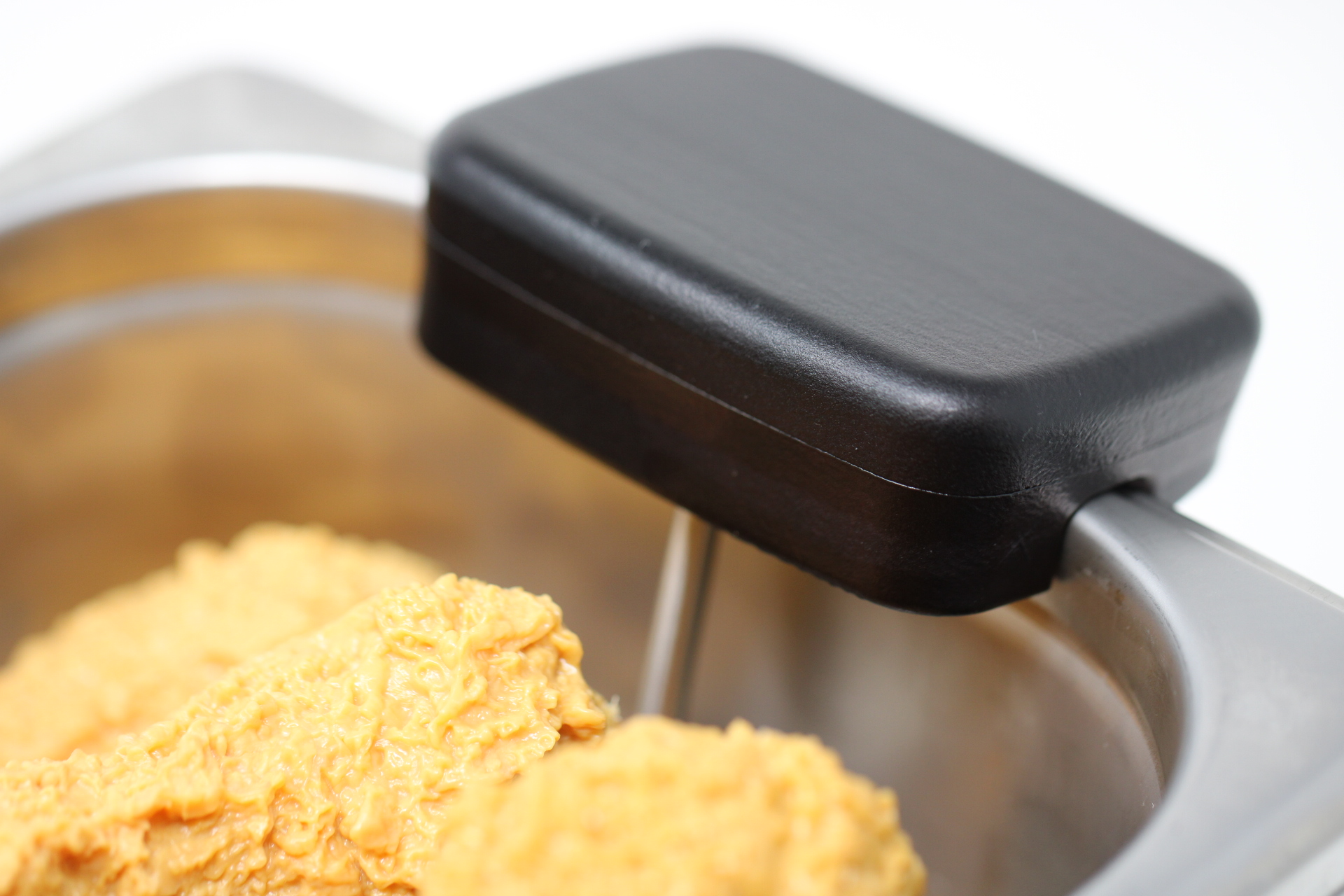
At its core is BluLine Solutions Mimic™ wireless temperature sensor embedded within an engineered thermal reactive plate specifically designed to mimic the thermal behavior of hot food products.
What Makes This Different?
Unlike ambient surrounding air sensors, which measure hot holding cabinet temperature, this system measures thermal mass behavior that closely replicates actual food performance.
The engineered thermal reactive plate:
- Absorbs heat like real food
- Retains heat like real food
- Responds to store and restaurant environmental changes like real food
The sensor continuously captures temperature data and transmits it wirelessly to a centralized cloud-based monitoring platform. The result is a real-time digital representation of product temperature performance without ever puncturing the food itself.
Why Thermal Simulation Matters More Than Air Temperature
Many operators assume monitoring air temperature is sufficient. It is not. Air temperature fluctuates rapidly and does not reflect the thermal stability of food. Food safety compliance depends on internal product temperature and not the hot holding asset cabinet air.
By mimicking the thermal mass of food, the digital twin approach bridges the gap between ambient measurement and invasive probing.
This engineered thermal modeling provides:
- Higher accuracy in reflecting true product conditions
- Reduced false alarms
- Meaningful trend data
- Continuous validation of holding performance
This is a shift from indirect monitoring to behavior-based monitoring.
Continuous Monitoring: From Compliance to Intelligence
The most immediate benefit of this system is 24/7 monitoring.
Instead of periodic snapshots, operators gain:
- Continuous temperature curves
- Automated threshold alerts
- Escalation notifications
- Historical data archiving
- Location-level and enterprise-level visibility
If temperatures drift outside safe ranges, alerts are generated immediately enabling intervention before food enters the danger zone. This transforms food safety from reactive compliance to proactive control.
Eliminating Manual Probing and Log Dependency
One of the most operationally impactful outcomes of this technology is the removal of manual temperature checks.
Operational Benefits
- Reduces labor burden during peak periods
- Eliminates cross-contamination risk from probe insertion
- Standardizes monitoring across all locations
- Removes dependence on employee consistency
Compliance Benefits
- Automatically time-stamped records
- Digitally stored and audit-ready logs
- Centralized reporting across multiple sites
- Reduced exposure to inspection violations
For organizations operating at scale, standardization is critical. Digital twin monitoring ensures every location adheres to the same performance standard.
Protecting Product Quality Through Precision Control
While compliance drives adoption, food freshness and quality drives revenue.
Overheating hot-held food is a widespread and often invisible issue. To avoid falling below required thresholds, operators frequently set holding units higher than necessary.
This creates secondary consequences:
- Moisture loss
- Texture degradation
- Reduced holding life
- Increased shrink
- Inconsistent customer experience
Continuous data enables precise calibration of holding equipment. Instead of operating with safety buffers based on assumption, operators can define optimal setpoints based on real performance data. The outcome is improved product consistency and stronger brand reliability.
Early Detection of Equipment Degradation
Hot holding equipment rarely fails instantly. Performance typically degrades gradually due to:
- Heating element wear
- Calibration drift
- Uneven heat distribution
- Electrical inconsistencies
Manual checks may miss early-stage degradation because temperature remains technically compliant during check intervals. Trend-based digital monitoring identifies subtle instability patterns before they escalate.
This supports:
- Preventive maintenance scheduling
- Reduced emergency repairs
- Lower equipment downtime
- Extended asset lifespan
For multi-unit operators, this intelligence creates measurable operational resilience.
Energy Optimization Through Data Transparency
Energy is a significant cost center in foodservice operations. Hot holding assets often operate at higher temperatures than required, consuming excess energy to compensate for uncertainty. The energy cost of operating a hot holding asset can be seven (7) times that of a stand-alone cold holding asset.
With precise thermal modeling and trend visibility, operators can:
- Adjust setpoints to true safe minimums
- Reduce unnecessary heat cycling
- Lower overall energy consumption
- Improve sustainability metrics
In an environment of rising utility costs and increasing ESG accountability, this capability adds strategic value beyond food safety.
Quantifying Shrink Reduction
Temperature-related shrink impacts both grocery prepared foods and QSR hot programs.
Loss occurs when:
- Food falls below safe thresholds
- Product dries out due to overheating
- Equipment malfunction goes undetected
- Holding life shortens due to thermal instability
Continuous monitoring reduces these risk factors. Even marginal improvements with shrink percentages can produce significant annual savings when scaled across multiple units.
The ROI equation extends beyond compliance, it directly impacts profitability.
Enterprise-Level Visibility and Standardization
For regional and national operators, the challenge is not simply food safety, it is consistency.
BluLine Solutions cloud-connected digital twin systems allow leadership teams to:
- Monitor all locations from a centralized dashboard
- Compare performance trends across sites
- Identify recurring equipment issues
- Benchmark compliance performance
- Standardize operational protocols
This elevates temperature monitoring from a store-level task to an enterprise-level strategic function.
The Strategic Shift: From Manual Verification to Autonomous Assurance
The food industry is undergoing digital transformation across nearly every operational domain. Inventory systems are automated, supply chains are tracked in real time and customer behavior is analyzed with predictive analytics. Yet temperature compliance is one of the most critical safety processes and often remains manual.
Digital twin thermal monitoring represents a paradigm shift:
From intermittent checks to continuous intelligence.
From human-dependent logging to autonomous documentation.
From reactive correction to predictive prevention.
This is not an incremental improvement. It is a structural redesign of hot food safety management.
The Future of Hot Food Safety
Regulatory oversight will continue to intensify. Labor markets will remain tight. Margin pressure will persist. Operators who adopt BluLine’s digital twin continuous monitoring technologies position themselves ahead of these pressures.
They gain:
- Reduced compliance risk
- Improved operational efficiency
- Higher food quality consistency
- Lower shrink
- Optimized energy usage
- Enterprise-level visibility
Most importantly, they reduce reliance on manual processes that were never designed for today’s scale and complexity.
Moving Beyond the Thermometer
Manual probing has served the industry for decades. But legacy practices should not define the future. BluLine’s digital twin wireless temperature monitoring introduces a more accurate, automated, and intelligent approach to managing hot food safety. For retail grocers, QSR operators, and restaurant owners seeking to modernize operations while protecting margins, the question is no longer whether automation is possible. The question is how long manual processes can continue to support a rapidly evolving industry.
Explore What Continuous Monitoring Could Mean for Your Operation
If you’re evaluating ways to strengthen compliance, reduce shrink, and modernize food safety processes, it may be time to assess whether your current monitoring system is delivering true temperature visibility or simply periodic snapshots. The next generation of hot food safety is continuous.
See the Data Behind Continuous Monitoring
Every operation is different. Equipment configurations, holding volumes, and labor models all impact performance. Request a live demonstration to see:
- How digital twin thermal modeling works
- What real-time monitoring dashboards look like
- How automated compliance records are generated
- Where shrink and energy savings opportunities can be identified
Book a personalized demo and evaluate the ROI for your organization.